Discover Our Products

Pneumax Clamping C2 Series

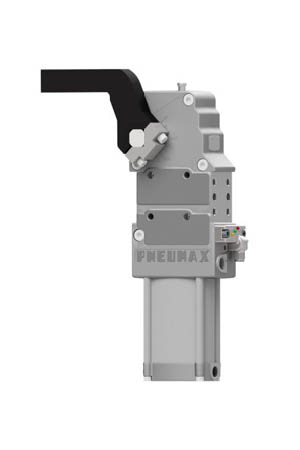
C2-Series Pneumatic Power Clamps (NAAMS)

The C2-Series are pneumatic power clamps designed for industrial automation and workholding applications. They follow the NAAMS standard, making them compatible with common fixture plates and tooling used in automotive and general manufacturing environments.

These clamps are used to securely hold parts during machining, welding, assembly, and inspection processes where repeatability and reliability are critical.


Operation & Function

  • Air-actuated clamp mechanism using compressed air to open and close
  • Designed for high-cycle, automated operation
  • Double-acting pneumatic design for controlled clamping and release
  • An optional manual override is available for setup or maintenance situations

NAAMS Compliance

  • Built to NAAMS dimensional standards
  • Ensures easy integration into standardized fixtures and tooling
  • Interchangeable with other NAAMS-style clamps and accessories
  • Clamp arms are selected separately based on application needs

Sizes & Configurations

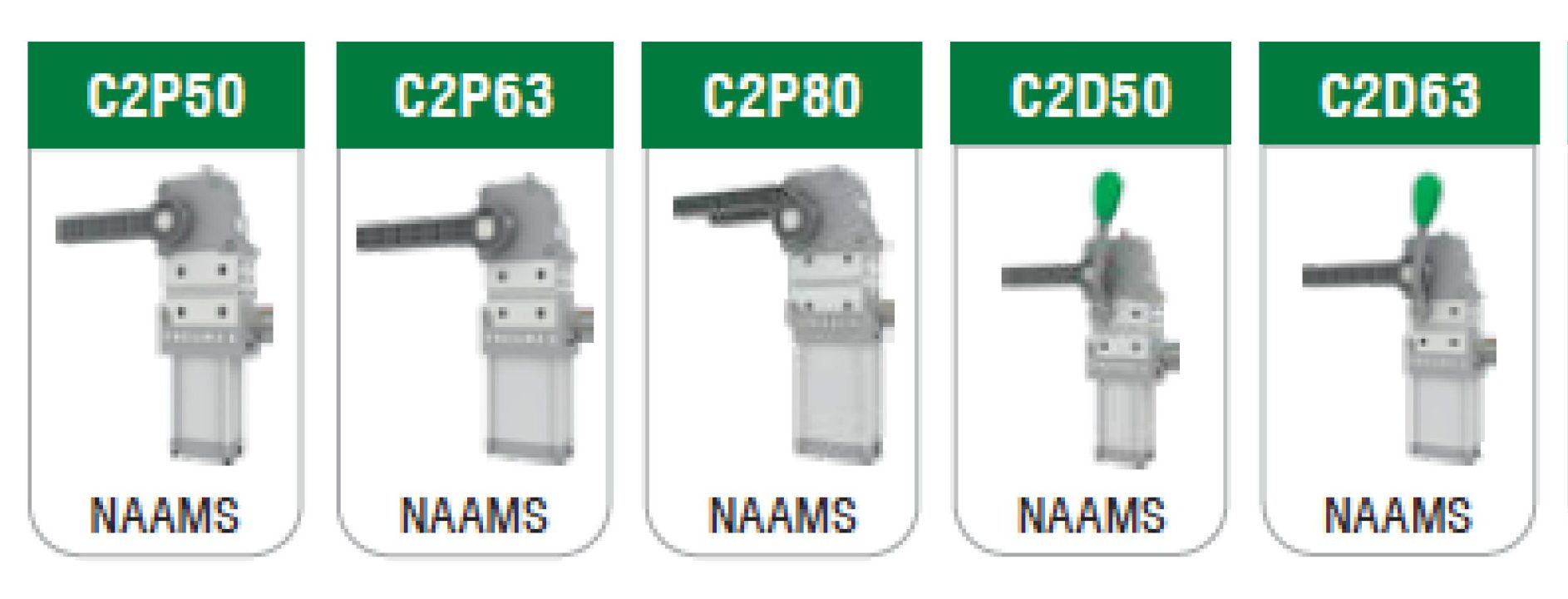
The C2-Series is available in multiple bore sizes, commonly including:

  • 50 mm bore
  • 63 mm bore
  • 80 mm bore

Larger bore sizes provide increased clamping force and holding capacity.


Construction & Design

  • Aluminum alloy body for strength with reduced weight
  • Compact footprint to minimize interference in dense tooling layouts
  • Designed for consistent clamping force and long service life
  • Factory-lubricated for low maintenance

Options & Features

  • Position sensing options available for open/closed feedback
  • Choice of port thread types to match pneumatic systems
  • Multiple output shaft orientations (left, right, or dual)
  • Compatible with a wide range of standard clamping arms

Typical Applications

  • Automotive body-in-white fixtures
  • Robotic welding cells
  • Machining and assembly fixtures
  • General industrial automation workholding

What Must Be Specified When Selecting a Clamp

  • Bore size (determines force and capacity)
  • Sensor requirement (if position feedback is needed)
  • Pneumatic port thread type
  • Output shaft orientation

Facebook
Twitter
LinkedIn